The Shape of Ideas
The Shape of Ideas
Among all the creatures of the earth man alone has the capacity to engage in abstract thought. Only man can mentally conjure up concepts that have no corollary in the physical world. He is free to explore intangible thoughts and beliefs, such as freedom, justice, and love—to name only a few. Man has access to experiences that have never been witnessed. He is able to speculate on the future, and to ponder his own existence. Nothing, it seems, is beyond man’s speculations and imaginings.
But as inspiring as all of this may be, the real miracle occurs when artistic shape and expression is given to the intangible: to transform abstract thought into sensory experience.
This talent is far more fantastic than the relatively simple labor of thinking abstractly. Without physical form, the imaginings of a human being—no matter how profound or satisfying—amount to literally nothing. Unless an artist paints, sculpts or draws an idea, its artistic value is lost. The very nature of an idea must be transformed for it to be communicated—the conceptual must in some manner enter the realm of the perceptual.
As any artist can testify, the struggle to give powerfully expressive, perceptual shape to a vision is indeed a mighty one. If the formal composition of a work lacks the adequate expressive capacity to relate the idea, the idea is neither compelling or consequential. Any idea—no matter how poignant or profound it may seem in its historical moment—is eviscerated by an inferior, poorly conceived material envelope. Vincent Van Gogh once summarized the near impossibility of the task facing artists by stating simply: “It is so difficult to make a thought a thing, to put it into lines and colors.”
As we demonstrate in The Biology of Form, the near independence of form from content is centered in the actual workings of the brain itself. The human brain is hardwired to initiate its engagement with art by recognizing and appreciating pure aesthetic experience. This occurs before any recognition of subject matter. The experience of art, expressed solely through a work’s formal composition, is a primal and biological part of man. Put simply, the appreciation of art’s sensual nature is entirely and utterly natural. Ideas and beliefs are secondary to form. They attach themselves to art and must face this simple fact: from the very birth of humanity, the human brain possessed a sophisticated understanding of, and an appreciation for, the formal qualities of art. The same cannot be said of the ideas that attach to art.
This is not to say that ideas and beliefs have no place in art. On the contrary, an idea—even a seemingly mundane one—if given masterful shape with such elements as lines, colors, shapes, and surfaces, gains immeasurably in expressive power. The union of a profound idea with masterful execution contain the layers of resonance that are the mark of any potential masterpiece. But a central truth remains: the brain’s initial and decisive engagement is embedded in the sensual, formal qualities of a work; everything else builds upon that foundation or fails for lack of it.
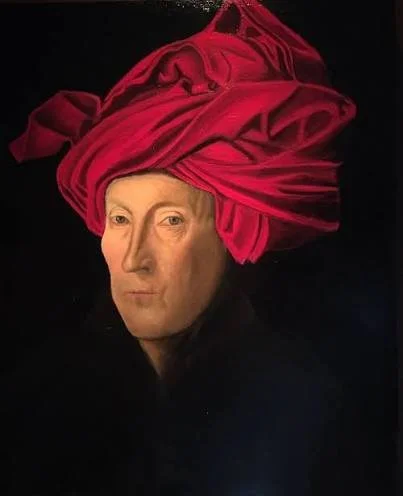
Ideas do not exist without form and require exemplary formal execution to enter the realm of the “masterpiece.” But can the “lines and colors” of a formal composition exist independent of a compelling idea? Critically, the answer is a resounding “yes.” The formal mastery of a work can carry sufficient meaning and emotional power to elevate even a relatively mundane idea—such as Cezanne’s Apples, Van Gogh’s Chair or Lucian Freud’s Naked Man, Back View— into the realm of the timeless masterpiece. Roger Scruton wrote extensively on this point:
The meaning of a work of art… lies in the form and is not really detachable from it. If you try to translate a poem into straight prose… then you lose the meaning. The meaning is not just what it says; it resides also in the form.
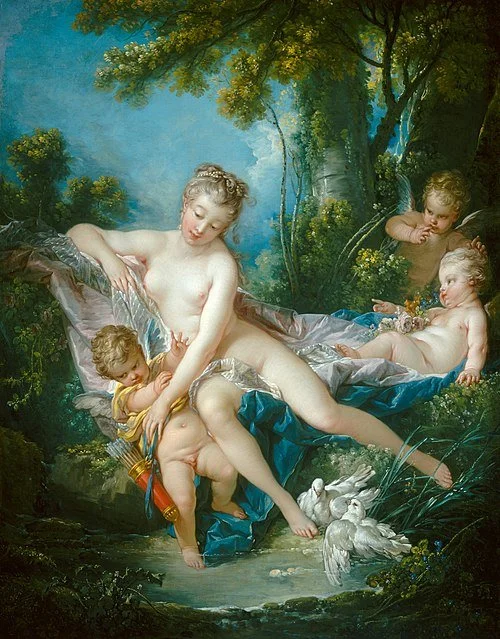
Francois Boucher’s Venus Consoling Love (1751) is hardly profound or philosophically ambitious. The borrowings from ancient mythology lend the thinest veneer of artistic credibility to a frank and titillating display of nudity. It may be a frivolous theme, but it is difficult to discount this painting’s rendering, which is so masterful that the work stands as one of the enduring masterpieces of the Rococo in France. The play of textures—the velvety, cascading folds of drapery juxtaposed to the transparent muslin and the shimmering silk—the vibrant and varied hues of blue, the softly modulated tones of slightly pudgy flesh, and the deceptively complex composition elevate a scene of questionable significance to a celebration of luxuriant sensuality. Boucher is an undeniable virtuoso of his art, and his robust handling of the medium allows virtue to reside in this painting—not in the idea it animates, but in the unequaled eloquence of its formal presentation.
The Direct Confrontation
The Direct Confrontation
When we stand in the physical presence of a masterpiece, our reaction is not an intellectual decision but an involuntary, unmediated, deeply embedded evolutionary response.
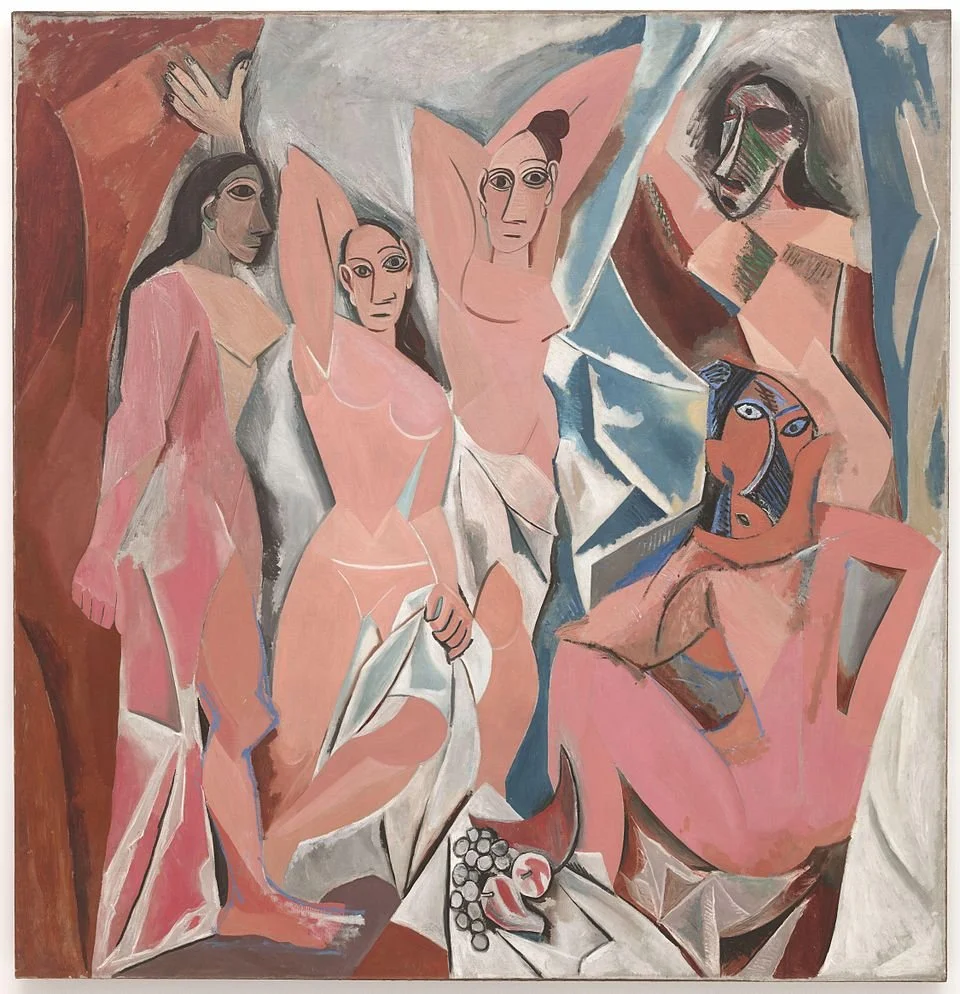
Modern science confirms that the brain makes a pre-conscious judgment about the formal composition of a work of art, triggering an emotional response up to three times faster than conscious thought can process subject matter. The human brain is hardwired to prioritize the immediate pleasure of pure aesthetic experience. All the ideas, contexts, and interpretations that scholars find so compelling may be valid areas of study — but they are extraneous to the direct confrontation with the artwork itself. “The experience of beauty is a direct encounter with the object. It is not mediated by concepts or ideology. It strikes us immediately, before we have time to think, and it moves us in ways that reason alone cannot explain.”
Whether the work was created yesterday or three thousand years ago makes no difference.
Whether it comes from Western traditions or a culture entirely foreign to our own does not matter.
Whether we have read volumes of theory or nothing at all changes nothing.
The human brain is indifferent to these distinctions. When we stand before a work that we judge to be extraordinary and feel ourselves moved, we are engaging in a natural, universal human response—one that lies beyond our conscious control. “The experience of beauty is a direct encounter with the object. It is not mediated by concepts or ideology. It strikes us immediately, before we have time to think, and it moves us in ways that reason alone cannot explain.”
The genesis of art is not intellectual. The capacity to experience the full, unmediated pleasure of its physical beauty is involuntary, emotional, and instinctual. It is in our biology.
It is in our ORIGINS.