

The Brain on Art
The test of life in a work of art is its power to rouse our senses to a state of responsive happiness which communicates itself to our whole being: this power is the distinctive quality of the work of art.
Dr. Lorenz Eitner (1919-2009), Stanford University
VI. Real-Time Neuroaesthetics: The Millisecond Verdict
For centuries, art historians have talked vaguely about ‘the eye’ or ‘the mind,’ but these were mere abstractions. Neuroscience gives us the real organ—the brain—and demonstrates that visual art is not a cultural luxury or an intellectual puzzle, but a direct manifestation of human neural biology.
—John Onians, Neuroarthistory: Making Science Useful for Art History
Although 20th century writers like Herbert Read had speculated about the biological basis of the aesthetic response, the idea lacked the evidence to combat assaults from the academic establishment. But with the rise of Neuroaesthetics at the turn of the millennium, neuroscientists like Semir Zeki argued that the study of art should be grounded in how the brain functioned when confronting visual stimuli. The first neuroimaging studies appeared within a few years, and by the early 2000s a number of influential papers proposed ground-breaking conclusions: the manner in which the brain processed works of art—especially the speed, the location, and intensity of the nervous system’s response to visual stimuli—could be analyzed and measured using relatively new technologies that provided high-resolution brain imaging and high-speed eye-tracking,
What had long been discussed in the abstract could now be verified in concrete terms. The neurological findings are unambiguous. Within approximately 50 milliseconds of exposure to a work of art, the visual system is already evaluating the work’s formal composition and assessing such properties as color, line, contour, texture, compositional coherence, balance, and spatial organization.
Truly masterful compositions trigger strong spikes of neural activity that engage the brain’s reward circuitry. The brain does not invest significant resources in visual disorder. It privileges art with formal compositions that are coherent, routing these images into deeper networks of memory, emotion, and reflection—networks we naturally tend to revisit. Weakly composed or formally incoherent works produce only scattered, low-level responses, and are largely forgotten.
The most significant finding related to art? The brain’s evaluation of a work’s formal properties occurs approximately three times faster than its engagement with the cognitive processes required to recognize and evaluate subject matter. The brain prioritizes all ideological subject matter as secondary in importance to the evaluation of art’s formal properties.
The brain does not wait to be instructed. When the eye confronts a work of art, the nervous system begins its evaluation of form without prompting, without theory, and without cultural permission. It simply follows a natural process that may have been an innate trait for several million years—in creatures related to us but not yet fully human. It was certainly present since the appearance of Neanderthals and, later, homo sapiens There is only one inescapable conclusion: the appreciation of form in human beings is an innate, biological process that is traceable in the neurological function of the brain. Form—not ideas, not theory, not ideology—is the primary concern when either making or evaluating art.
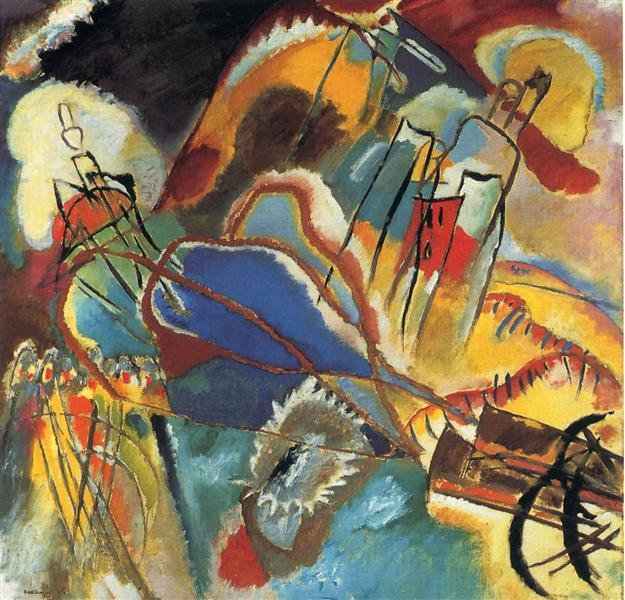
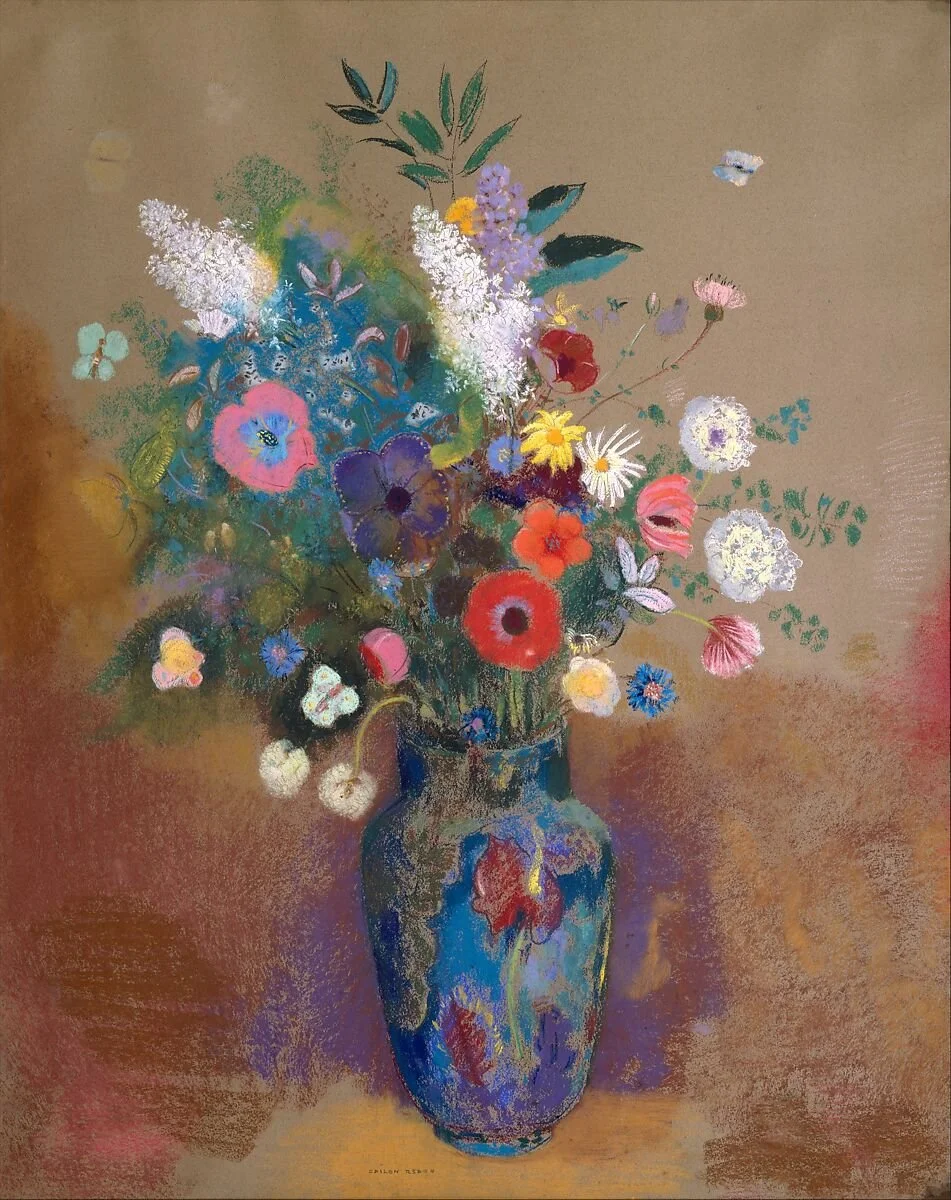

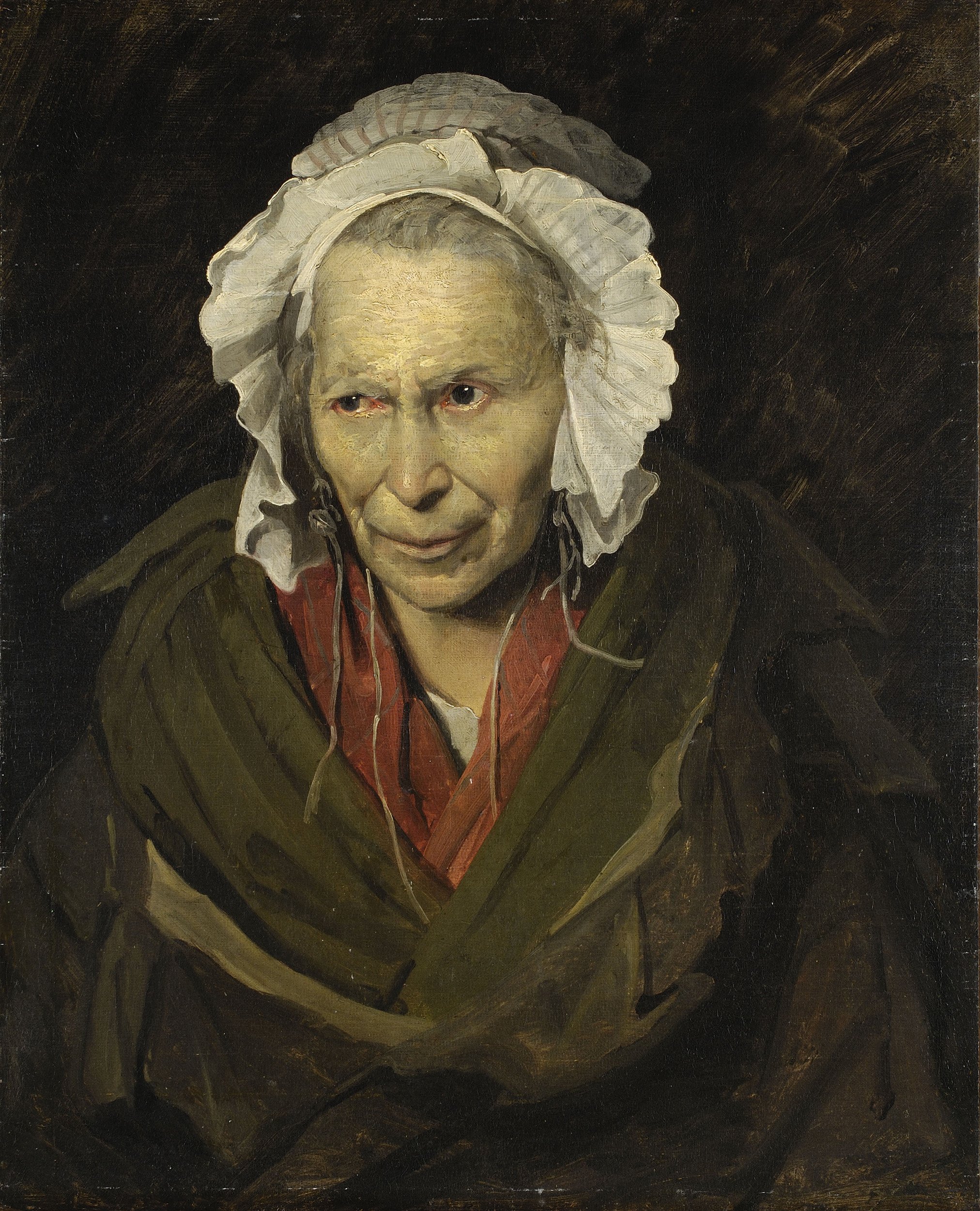


The Human Brain on Art
The brain initiates the process of evaluating form typically within 50 milliseconds of confronting a work of art. To put this in perspective: a single blink of the human eye lasts between 100 and 150 milliseconds. The brain begins issuing its aesthetic assessment of form in about one-third the time required to blink.
The brain’s initial response does not occur in a sequence of later steps. It engages several operations simultaneously that combine to form one rapid, pre-conscious event.
Within a fraction of a second, the visual system evaluates a work’s formal arrangement while the visual cortex floods the system with all the data the eyes are receiving: color, shape, line, composition—the entire formal structure of the artwork.
If the formal arrangement of a work is judged compelling, the mesolimbic reward pathway is engaged. This pathway sends dopamine signals from the ventral tegmental area to the nucleus accumbens and related structures. This is not an intellectual appraisal. It is an involuntary physiological event: a measurable surge of positive charge that the viewer experiences as pleasure, heightened interest, or the sudden conviction that something significant has occurred
Lorenz Eitner described this opening with remarkable precision as “a turbulent confluence of sense impressions and involuntary associations.”
As the encounter continues, another system remains in play. The Default Mode Network is a highly-integrated group of three core brain hubs located in both hemispheres of the brain. They activate together when the brain is not focused on the outside world. The DMN is associated with inward states: self-reflection, mind-wandering, autobiographical memory, a sense of one’s own inner life. The DMN is also the center of daydreaming, mental time travel and “what-if” scenarios, and has been called the “primary generator” of imagination.
During most externally directed tasks, it is suppressed, which allows the brain to concentrate on activities that are occurring in the outside world. Scientists therefore expected the DMN to suppress while a person viewed a work of art—an object that exists in external reality. But contrary to expectations, when an art object was found truly compelling, the DMN remained engaged and helped to form a “bridge” between the visual data rising through the sensory system and the viewer’s own feelings, inward thoughts, and sense of self.
Researchers describe this highly unusual circumstance as an “interplay” between the viewer’s personal thoughts and feelings with the visual sensations of the artwork. During this event, the brain involves itself in a kind of “free play”—a rapid exchange between the formal constitution of a work and the mind’s own thoughts and emotions. Viewers are not just registering the visual sensations of a painting nor are they simply thinking their own thoughts. The two stay in play with one another, and the longer this back and forth continues, the more profound the viewer’s engagement and the more complex the emotional experience. Quite naturally, the viewer arrives at not only a deeper understanding of the work, but its visual composition becomes intelligible—something to be “read” and engaged as personally relevant.
This result was entirely unexpected. The Default Mode Network is the machinery of inwardness—self, memory, the private stream of thought. The exciting conclusion reached by scientists was that the activation of the DMN was contingent on one significant action: the brain had to evaluate a work’s formal structure and, then, judge its aesthetic quality of such excellence to be compelling. This verdict of excellence—of quality in art—signals the DMN to stay in play and concentrate on inward thoughts and feelings. The formal arrangement of a compelling work does not remain outside the viewer’s inner life—it actually inhabits it.
This is what researchers speak of when they describe the DMN as a bridge, of its engagement in free play, and of its critical role in making the work of art possess a meaning that is deeply personal to the viewer. Eitner foresaw all of this with uncanny accuracy at least 50 years before Neuroaesthetics could confirm it. He put it another way and stated: “the test of life in a work of art is its power to rouse our senses to a state of responsive happiness which communicates itself to our whole being…”
What Eitner defined as “responsive happiness” is the brain encountering a work it judges as “compelling”—the experience is no longer restricted to the visual sensations coming from the eye. It is the shock of form: the senses are seized, the composition is judged, pleasure begins. If the work is strong enough, that shock does not remain a flicker. The same form continues to act. Reward does not switch off. Inward life does not stay sealed away from what the eyes are seeing. Sensation, pleasure, and self-reflection begin to occupy the same experience.
“Whole being” is the right phrase because the response is no longer only visual. It is emotional. It is felt throughout the body. It feels personal, as if the work had found a place in the viewer rather than remaining an object separated from the viewer by space. The painting is still the painting; the viewer is still the viewer. But the boundary is less sealed. Form has become something one inhabits.
The first moment tells the nervous system that the work is compelling. The responsive happiness is what it feels like when that verdict has taken hold—when looking has become a state, not a glance.
This entire process is biological—involuntary, rapid, and independent of theory—and possessed of an ancient character. When a work of art seizes us in this way, the experience feels magical, precisely because it is not under our conscious control. Something in the organized form of a magnificent work of art reaches into our nervous system and produces a natural response completely independent of our reasoning. That is the source of its power. That is why the greatest works continue to move us across centuries and cultures. The magic is real, because the biology is real.