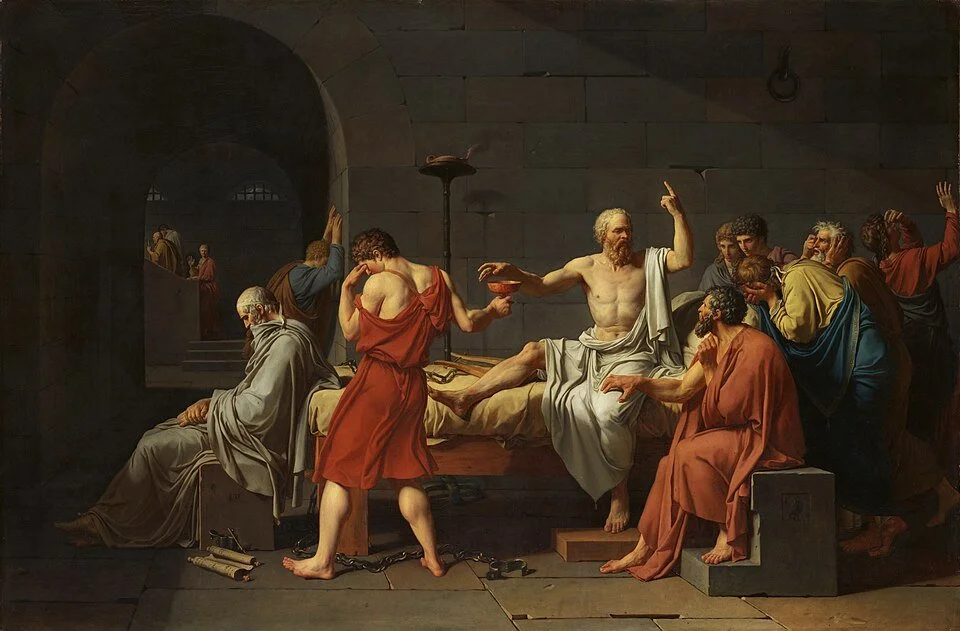
I. A Crisis of Meaning
I. A Crisis of Meaning
The subjugation of art—and of cultural life generally—to political ends has been one of the great spiritual tragedies of our age. Among much else, it has made it increasingly difficult to appreciate art on its own terms, as affording its own kinds of insights and satisfactions. — Roger Kimball
Today’s leading art institutions are locked in a profound crisis of meaning that stems from a misunderstanding of art’s fundamental nature.
The contemporary establishment—primarily our universities and major museums—presses art into the service of political ideology by defining it as an intellectual and political exercise. This view demands that art can only be experienced when mediated through the lens of ideas.
This stands in stark contrast to the central principle that guided art and art history for generations; art is, at its very core, a sensual experience. This view asserts that everything compelling and profoundly meaningful about art is concentrated in the viewer’s direct encounter with the physical composition of the object.
The traditional emphasis is in the viewer’s transformative experience with a work of art. When the viewer confronts a work of art of extraordinary quality, the mind is, within a fraction of a second, overwhelmed with what Lorenz Eitner described as “a turbulent confluence of sense impressions and involuntary associations.” Once engaged in this experience, the formal composition of an object exerts its power to, in Eitner’s words, “rouse our senses to a state of responsive happiness which communicates itself to our whole being.” This is why works that possess a virtuosic organization of formal elements are recognized as having quality, and why only a fraction of these are called masterpieces.
Masterpieces—works of extraordinary formal excellence—once formed the core of the art-historical canon. A number of them have, for centuries or even millennia, resisted the oblivion to which almost everything made by human hands is eventually consigned. The process that sustains them is not faultless in every detail, yet it has proven remarkably consistent. Judgment of this kind is not primarily deliberative, nor is it directed by committee. In the context of art, its trust rests in what Eitner calls the “fundamental permanence of the human sensory constitution.” The canon of art history is a living inheritance, composed of masterpieces that past generations have judged to be of transcendent beauty and feel compelled to pass on to future generations. Almost without exception, their value has proven to be remarkably lasting, and their appeal has remained vital to connoisseurs, instructive and worthy of emulation to artists, and deeply resonant for those who encounter them directly.
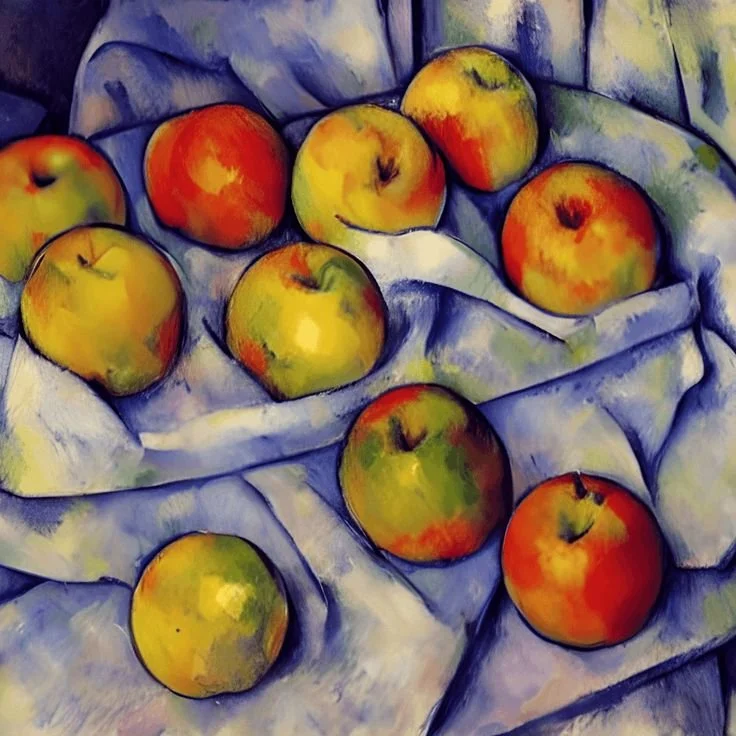
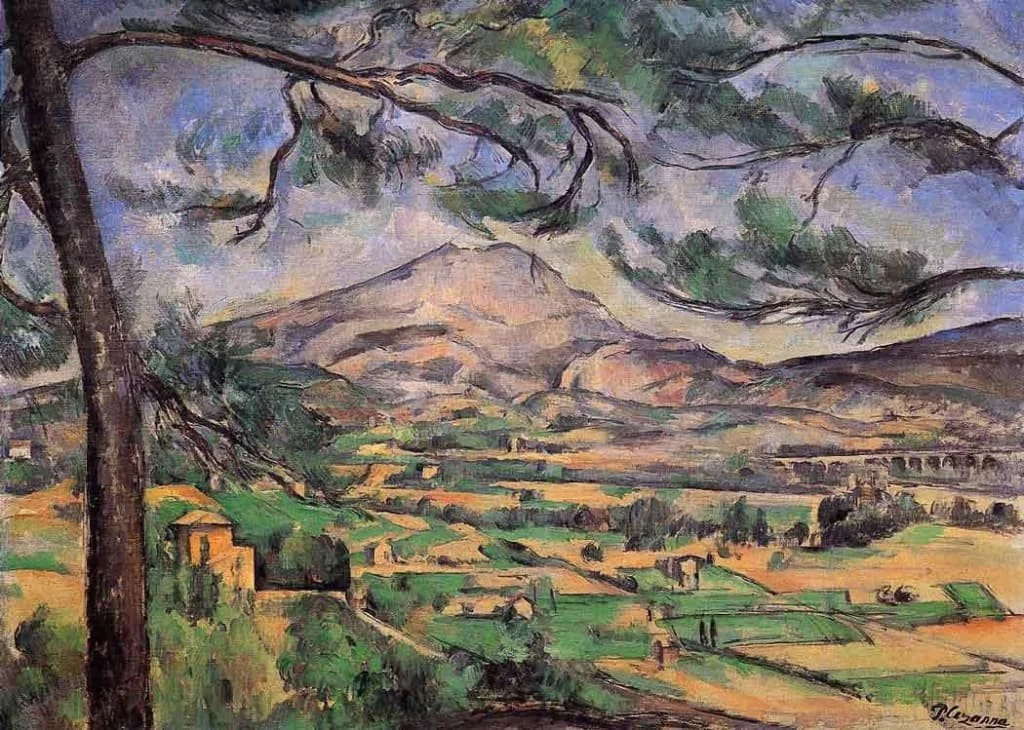
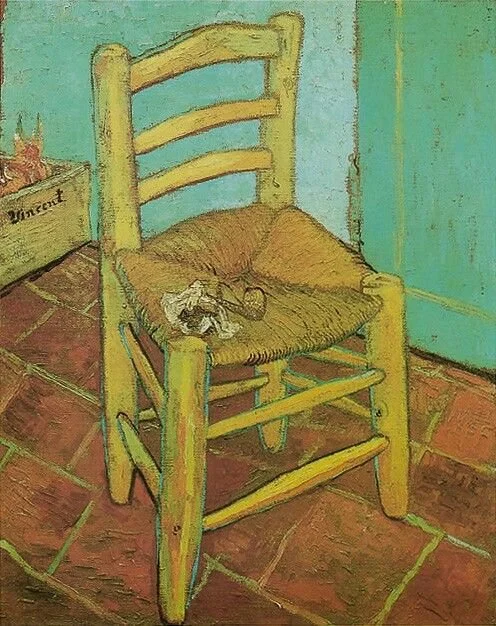
Ideas in art are of secondary importance; they depend entirely on form for their expression. The force of an idea is proportional to the expressive power of the formal composition that carries it. Beautiful form intensifies an idea; weak form renders even the most earnest idea inconsequential. Form itself carries meaning and can exist without a compelling concept. This accounts for the lasting appeal of Van Gogh’s Chair or Cezanne’s Apples. Art is a sensuous medium, and the sensual handling of an object—no matter its medium—is the fundamental force that drives the viewer’s experience.
The postmodern turn that began dominating academia in the late 1960s found this older view deeply problematic. Grounded in grievance and suspicion, the new scholarship pronounced that true meaning in art could be uncovered only by treating the physical composition of a work with skepticism—or, in more militant accounts, with outright rejection. The formal structure of a work was no longer trusted as the primary site of meaning. The new framework denies that formal quality can be shared. Excellence is no longer based in what the eye can verify in the object. Any judgement that one work is better than another is read as imposing a hierarchy of taste that is shaped by the oppressive forces of race, gender, class, and power. Formal mastery and the transcendental character of aesthetic experience are dismissed as Romantic myths, better suited to the nineteenth century than to the realities of the twenty-first. The transcendent joy of aesthetic experience is not denied, it is discredited as something made intelligible only because of bourgeois conditioning; unreliable to make judgements, and set aside so that meaning can be sought in ideas and ideology.
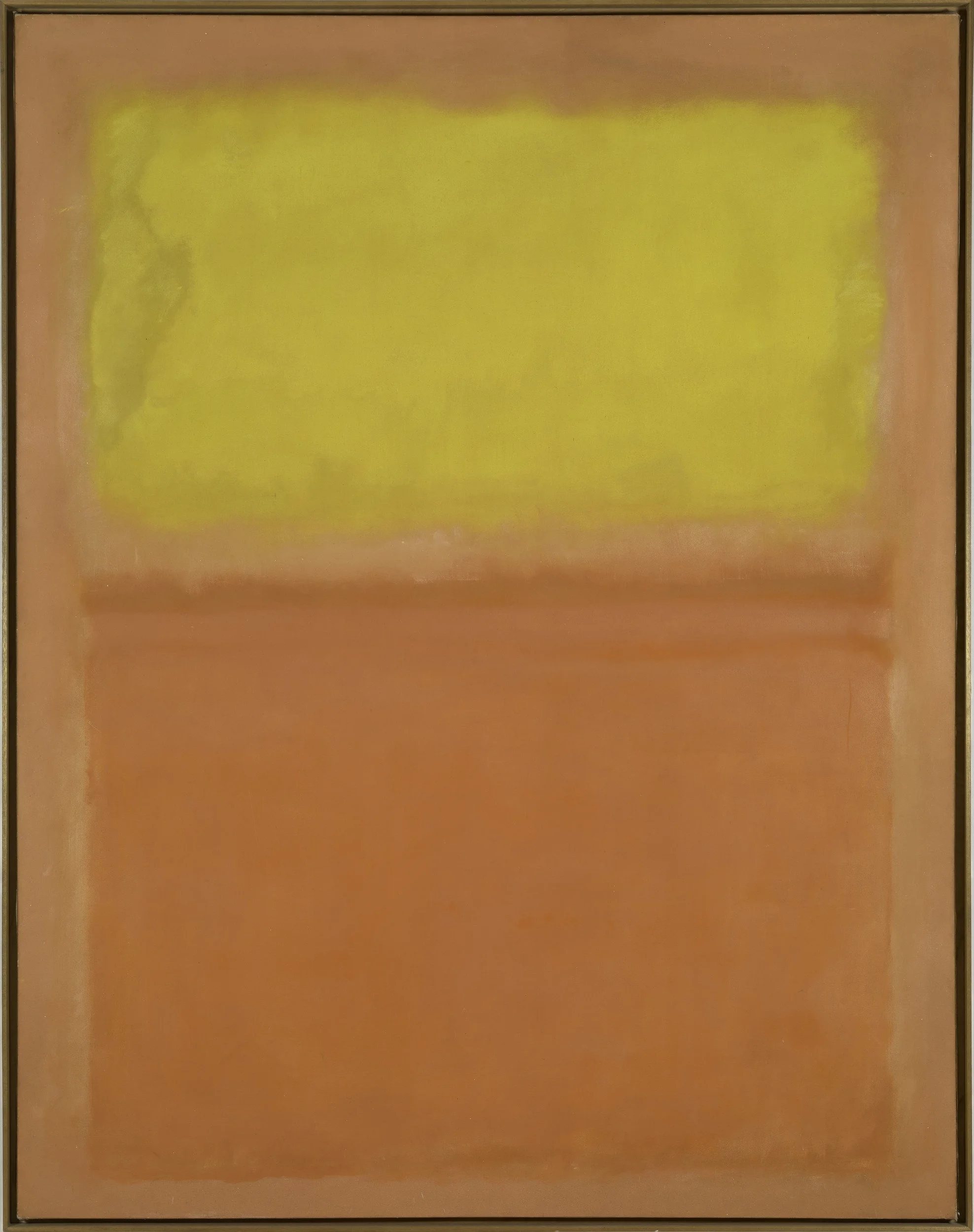
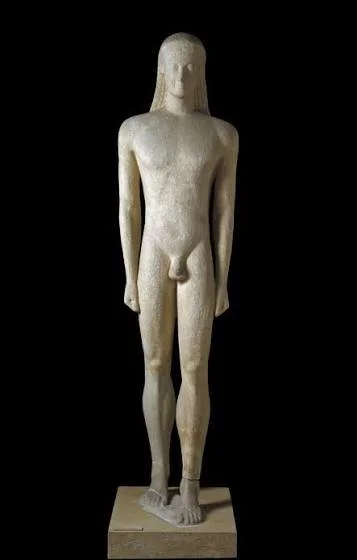
The “New Art History”
When the “New Art History” emerged in the 1970s and rapidly became the mainstream consensus, it insisted that art must be interpreted through broader social, political, and cultural contexts. Its aim was to expose the inequities of the Western tradition by focusing on identity, class, and systemic oppression. Almost overnight, art was transformed from an autonomous sensuous object into a vehicle for ideology, something to be “decoded” according to social and political structures—little more than an illustration.
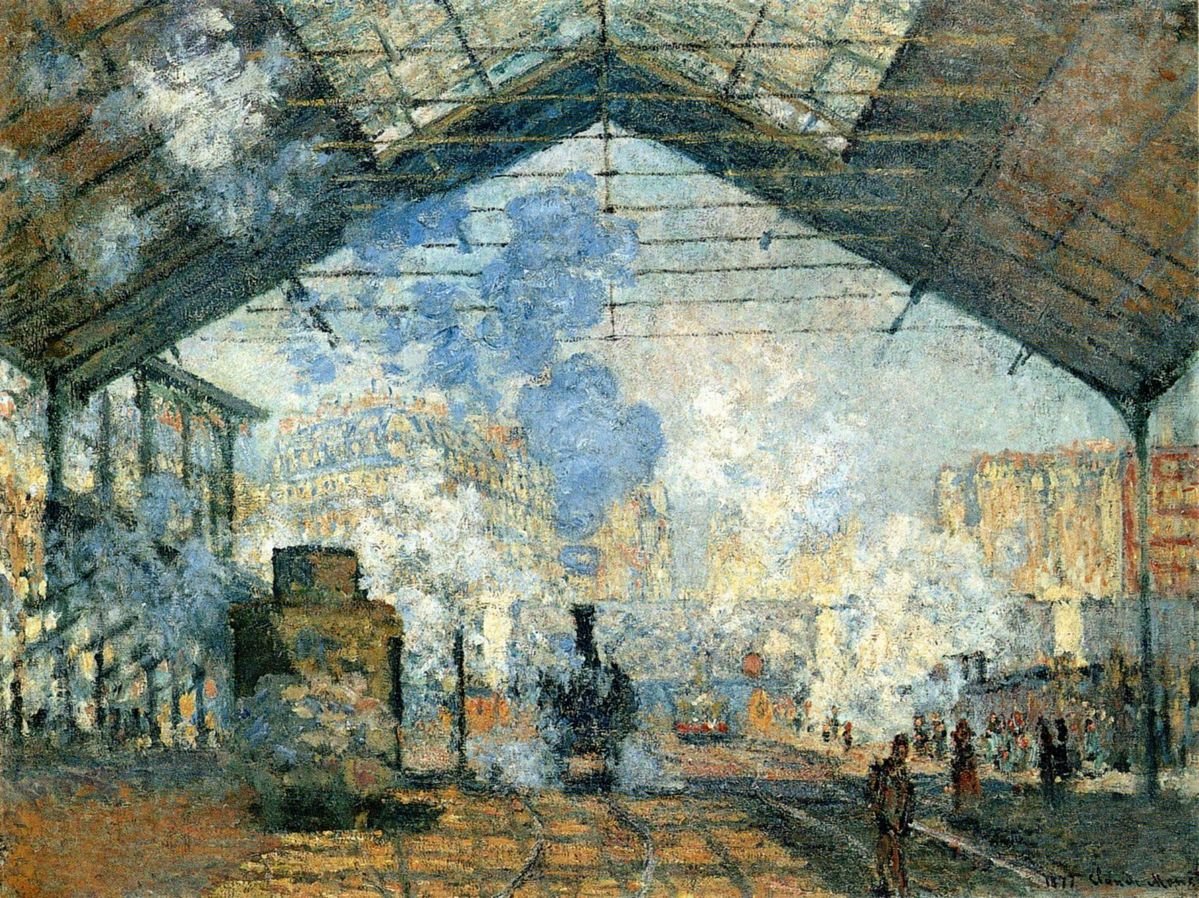
Once inquiry moved away from the perceptual experience of the object, the direct confrontation with the physical work became almost unnecessary. Nuances of color, line, surface, and composition were dismissed as subjective, class-bound judgments—the unstable province of connoisseurs preoccupied with formal subtlety and refinement. Formalism’s grounding in material, visible form was relentlessly assaulted by critics as existing in a self-contained “optical” bubble, enamored with “pretty surfaces.” Even worse, because formalism was so engaged with “how things look,” it ignored the work of exposing oppressive power structures of gender, class and institutional injustices. But the leading defender of formalist orthodoxy, Clement Greenberg, continued to maintain: “Art is a matter strictly of experience, not of principles, what counts first and last in art is quality, all other things are secondary.”
Greenberg suffered an onslaught of criticism from nearly all the leading theorists of the time: from T.J. Clark and Rosalind Krauss to Hal Foster and Benjamin Buchloh. Feminist and Marxist critics especially asserted that formalism was “naive,” “superficial,” and “a dead end for critical thought.” By ignoring social concerns and asserting the validity of tradition in its critique of art, formalism upheld the conservative agenda and sustained art’s role in the capitalist market and existing social order. Formalism’s insistence on the primacy of the canon and the existence of “masterpieces” sustained and promoted patriarchal and elitist social structures that critics were fighting to dismantle.
Clearly, the ostensible neutrality of formalism wasn’t neutral at all. Critics claimed that the silence of formalists toward theory and ideology was an act of complicity in maintaining all of the corrupt social systems that oppressed the weak and disenfranchised of an inherently unjust society. By the year 2000, critical theory had ascended to the moral high ground. What became known as “cancel culture” set the purge in motion—the targeting of formalism for obliteration on university campuses was the just and moral thing to do. The majority of faculty at the most prestigious art history departments in America were now in some manner teaching and publishing critical theory. The days of formalism having any presence in higher education and in major museums were nearly over.
This was a seismic shift in the study of art history that, not coincidentally, greatly facilitated academic research. Inquiry into art could now be conducted—often entirely—through photographic reproductions consulted within university and museum offices. For many American art historians especially, this was a boon to research: it eliminated the need for expensive, time-consuming, and laborious travel to experience an object first-hand. Such travel, once deemed invaluable for bringing authenticity to research, now served only to slow the output of publications, the primary engine of academic advancement. By the 1980s, the quantity of research in art history skyrocketed, and its quality began a slow, downward turn.
Art’s new role of merely illustrating ideas increased its value tenfold to the ranks of faculty that were growing exponentially as university enrollments hit historic highs from the mid-1960s onward. As the professorate grew in size, the making and critique of art was slowly relinquished to younger generations with innovative ideas of how art could be drafted into the service of political ends for the collective good. This allowed them to sidestep a nagging problem that Dave Hickey, a prolific critic of art education at universities, stated succinctly: ”Ideas can be managed. Aesthetic pleasure cannot.”
The formalist view that was slowly being squeezed out of higher education embraced expressive freedom. Like the broader Western tradition from which it sprang, it made no ideological demands on art whatsoever. It was directed by only one central principle: for a work of art to be included in serious intellectual discussion, it had to attain a high degree of formal excellence—a judgment grounded in the work’s perceptible structure rather than in its abstract political utility. For those of us in graduate school in the 1980s, it was already clear that the New Art History had no place for formalism and intended to remove it from not only the curriculum but consideration for future faculty appointments. Hickey was perhaps the most perceptive of academia’s critics, and wrote:
The language of visual affect, of beauty and desire, has been systematically banished from the discourse, replaced by a vocabulary of blunt instrumentality: social critique, historical contextualization, and therapeutic intervention. These are properties that can be administered, taught, and evaluated by committees.
The Complexity of Formalism
One of the significant factors that initiated the move away from formalism was the notorious difficulty associated with mastering the approach. Formalism is grounded in description, and it requires precise, accurate analysis of at least three things: a work’s formal properties, of how those properties interact to produce expression, and the emotional response that expression elicits from the viewer. The approach is, therefore, highly accountable to the physical object: if the description does not correspond to what is actually visible and verifiable, the argument fails.
For critical theorists this was a serious liability. Approaches grounded in social, political, or ideological frameworks could be elaborated and defended with far less risk of direct visual contradiction. That difference in vulnerability helps explain why many found the newer methods more tractable and professionally advantageous.
Translating what the eye perceives into linear prose is a monumental literary challenge. Any attempt to translate into language the lived moment between beholder and object inevitably flattens and distorts it. The philosopher and critic George Steiner wrote In Real Presences that genuine aesthetic experience is "un-sayable" and pushes us past the border of language into silence. Gerhard Richter gave a painter’s view of the problem when he stated: "You can only express in words what words are capable of expressing—what language can communicate. Painting has nothing to do with that." The philosopher Susanne Langer perhaps put it best when she wrote that there are aspects of experience that are “presentational” rather than “discursive”—they can be shown, but never fully stated.
Nearly everything about the viewer’s encounter with the art object is uncertain, and at its very heart is an experience that stubbornly resists conceptualization—”responsive happiness.” This powerfully aesthetic experience—that “communicates itself to our whole being”—feels ineffable: a sudden sense of emotional resonance and harmony that defies neat summary. You can circle around it with metaphors and descriptions, but you can never completely capture or reproduce the experience itself. The living encounter remains stubbornly personal, ephemeral, and resistant to full description.
For modern academics, a methodology that is difficult to master, time-consuming to write, requires close observation of the object, and is centered on a sensual experience that resists full description made the approach unfathomable for research. Ideological criticism offers a far more productive path: it provides a clear moral directive, a predictable set of theoretical tools, and a reliable method for generating publications while signaling intellectual sophistication and ethical commitment. By the 1980s, an arsenal of methodologies drawn from disciplines across the university campus was deployed in art departments: Post-Colonial Theory, Queer Theory, Radical Feminism, Critical Race Theory, Identity Politics, Marxism, and many more.
Meanwhile, the one methodology that promoted satisfaction through aesthetic experience was under assault and being abandoned.
The Threat of Beauty
For half a century critical theory has systematically undermined the foundational values of the Western tradition, portraying its history, institutions, and achievements as instruments of subjugation. Beauty, quite literally, became dangerous—a weapon wielded by the oppressor. Roger Scruton observed the cultural consequence:
At some time during the aftermath of modernism, beauty ceased to receive those tributes. Art increasingly aimed to disturb, subvert or transgress moral certainties and it was not beauty but originality—however achieved and at whatever moral cost—that won the prizes.
Time and again, critical theorists identified the union of art and beauty as an obstacle to their pursuit of political power. They warned that the belief in the ability of beauty to elicit a transcendental experience would prove fatal to their cause. Theodor Adorno, one of the leading figures of the Frankfurt School, held one of the more pessimistic views of art. His statement that “Every work of art is an uncommitted crime," became a reliable mantra. He declared: “Art is magic delivered from the lie of being truth.”
Despite Adorno’s objection, there is indeed much about aesthetic beauty that is magical: it elicits an immediate, direct, profoundly personal response that is entirely involuntary. It bypasses any mediating influence like ideology. For critical theorists this represented the very heart of the problem: the profound experience that occurs between object and viewer is an assertion of the viewer’s independence. It occurs outside the “ideological framework” that theory superimposes on the art experience and allows the individual viewer to govern art’s interpretation. To control the individual, art had to be mediated by ideology.
Theorists wasted no time in condemning not only the practitioners of formalism but any viewer who found satisfaction in beauty—this was denigrated as “bourgeois self-indulgence.” As far back as the mid-1930s, Walter Benjamin attacked those who shirked their political duty and found in art an “object of comfortable contemplation,” which he asserted turned art into something attractive and therefore an “article of consumption.” Adorno took this a step further and wrote:
Whoever concretely enjoys artworks is a philistine; he is convicted by expressions like ‘a feast for the ears.’
The allure of art lies precisely in the emotional satisfaction it can produce—what Eitner called “a state of responsive happiness.” This transcendental power of art—the sense of completion and universal connection it brings—resides at the opposite end of the spectrum from the discontent and resentment that animate much of critical theory.
Vladimir Lenin, after listening to Beethoven’s Appassionata, captured perfectly the tension:
I know of nothing better than the Appassionata and could listen to it every day. What astonishing, superhuman music! It always makes me proud, perhaps with a childish naiveté, to think that people can work such miracles! … But I can’t listen to music very often, it affects my nerves. I want to say sweet, silly things, and pat the little heads of people who, living in a filthy hell, can create such beauty. These days, one can’t pat anyone on the head nowadays, they might bite your hand off. Hence, you have to beat people's little heads, beat mercilessly, although ideally we are against doing any violence to people. Hm—what a devillishly difficult job.
Revolutions are not fueled by kindness or sympathy or saying “sweet, silly things;" they are fueled by resentment, discord, and, when necessary, unbridled forms of violence—”you have to beat people’s little heads...” Where the natural human impulse seeks beauty, harmony, connection, and peace—critical theory demands disruption. Herbert Marcuse, a near iconic presence of the Frankfurt School, insisted that genuine liberation requires the subversion of established culture because the pleasure it brings is a substitute for real liberation. It leads to a “one-dimensional man” with a “happy consciousness”: an internalized satisfaction that makes resistance to an “unfree society” seem less urgent and even unnecessary. Contentment leads to passivity toward injustice. Art must be forced into permanent friction with the established political order. Adorno described it clearly as the “task of art today is to bring chaos into order.” Marcuse identified art’s fatal weakness when he stated:
By virtue of its form, [art] pacifies the horror, the ugliness, the cruelty of reality, even where it presents and indicts these features. In this sense, all art is essentially a happy end.
The Aftermath
The damage from the near abandonment of formalism is unmistakable. The pessimism of critical theory, its flagrant desire to disrupt stable society, to denigrate contentment as bourgeois and to sew the seeds of discord to facilitate revolution is anything but inspirational. Younger audiences—the future lifeblood of any institution—show the clearest signs of disengagement. Thirty percent of young collectors reportedly refuse even to join museum memberships. The number of art history degrees awarded fell by roughly a third between the 2010s and 2020s. Connoisseurship—the rigorous analysis of an artwork’s formal qualities for purposes of authentication, attribution, and quality assessment—is now taught at a degree-granting level at only a handful of institutions worldwide. In the United States, with over 368 art history departments, traditional object-based training is nearly gone.
Attendance at art museums has stagnated or declined, with more than half of all museums reporting that 2026 attendance remained well below 2019 levels.
As Roger Kimball commented in 2007:
…the art world has wholeheartedly embraced art as an exercise in political sermonizing and anti-humanistic persiflage, which has assured the increasing trivialization of the practice of art. For those who cherish art as an ally to civilization, the disaster that is today’s art world is nothing less than a tragedy.
“Crisis” and “collapse” are words often used to describe the decline of interest in the other disciplines of the humanities, where critical theory dominates. Between 2012 and 2024, total humanities degree completions plummeted by more than 33%, even as total university enrollments across all fields grew. Tenure-track faculty hiring in humanities departments has dropped to historically low levels, forcing universities to either close humanities programs entirely or rely heavily on low-paid adjunct instructors. Forty percent of humanities degree holders say they would not choose the same major if given the chance.
Science has demonstrated that the capacity for art is biological, and it has confirmed that our earliest ancestors already possessed the desire to be moved by visual form. Recent discoveries have confirmed that more than 60,000 years ago—long before the rise of complex hierarchical societies—Neanderthals may have been one of the first hominems to engage in an artistic act by painting marks and hand stencils on cave walls. It was natural, instinctual behavior: one of the earliest recorded moments in which a human took pure visual delight in the realization that human intent could leave a permanent formal imprint on the physical world. But the greatest significance of these discoveries lies not in any single hand stencil, but in the larger body of hand stencils, marks, and painted galleries left by both Neanderthals and later Paleolithic people. The total number of such images runs into the thousands, with a geographic reach extending from Western Europe to the Urals, Indonesia, Australia, and parts of Africa.
Art was part of our prehistoric ancestors deepest nature, and our own sense of beauty, our own desire to create lasting artistic statements are inherited from them. This reflects the power of form, and it operates without abstract ideas, social constructs, or political agendas. As Sir Herbert Read wrote nearly a century ago: “The sense of form is not an acquired habit, but an inherent biological property of the human organism.”
The drop in humanities majors over the last twenty years—in English, art history, the classics, and philosophy—has been steep, and it cannot be explained by economics and careerism alone. Universities prefer those explanations, and both pressures are real. But they have been with us for decades, and, yet, a liberal-arts education remained a popular and respected path through the 1960s. Something in the classroom changed.
In art history the change is not difficult to track. When critical theory displaced formalism, the natural delight a human being takes in beautiful, transcendent form was crowded out by a politics that treated discontent as the subject of serious study and wonder as naïve. Cynicism became the mark of sophistication. This may not be the only reason students left the humanities, but it is the reason for the exodus from the discipline of art history itself.
To restore art to daily life, we must restore the primary role of form in making and judging it. In the next chapter, The Biology of Form, we demonstrate how the formal composition of art resides at the heart of being human. It is a natural and demonstrably biological behavior. It affirms who and what we are. The formal nature of art is not only an innate part of being human, it is deeply embedded in our very origins.